Key Takeaways
- Komodo offers excellent visibility year-round, while Raja Ampat peaks during October to April for clearer waters.
- Manta encounters are more frequent in Raja Ampat during the November to April period, enhancing dive experiences.
- Spice Island Divers offers a 5-night package with 11 dives and a luxurious seafront villa stay.
- The 3-night package at Spice Island Divers offers discounted rates, ideal for budget-conscious divers seeking shorter trips.
When deciding between Komodo and Raja Ampat for your 2027 diving adventure, consider that Komodo often offers better visibility whereas Raja Ampat is renowned for more frequent manta ray encounters. Both destinations provide unique marine experiences, but your choice may ultimately depend on whether you prioritize clear waters or lively marine life.
Understanding Diving Conditions: Komodo vs. Raja Ampat
Komodo National Park, located in Indonesia, is famous for its crystal-clear waters, often boasting visibility of up to 30 meters or more. This excellent visibility provides divers with a clear view of the marine landscapes, including coral gardens, walls, and the diverse sea life that inhabits them. The best time to dive in Komodo for optimal visibility is during the dry season, from April to December, when the weather is typically more stable. Conditions during these months are ideal for exploring sites like Batu Bolong and Castle Rock, which are teeming with marine life.
In contrast, Raja Ampat, situated in the heart of the Coral Triangle, offers a different diving experience. Although the visibility in Raja Ampat can sometimes be less than that of Komodo, ranging from 10 to 25 meters, its biodiversity is unparalleled. The nutrient-rich waters may reduce visibility slightly, but they support a vast array of marine life, making every dive an exploration of one of the richest marine environments on the planet. The optimal diving season in Raja Ampat runs from October to April, when seas are calm, and the chance of rain is lower. Key dive sites like Misool and the Fam Islands are particularly lively during this period.
Manta Ray Encounters in Komodo and Raja Ampat
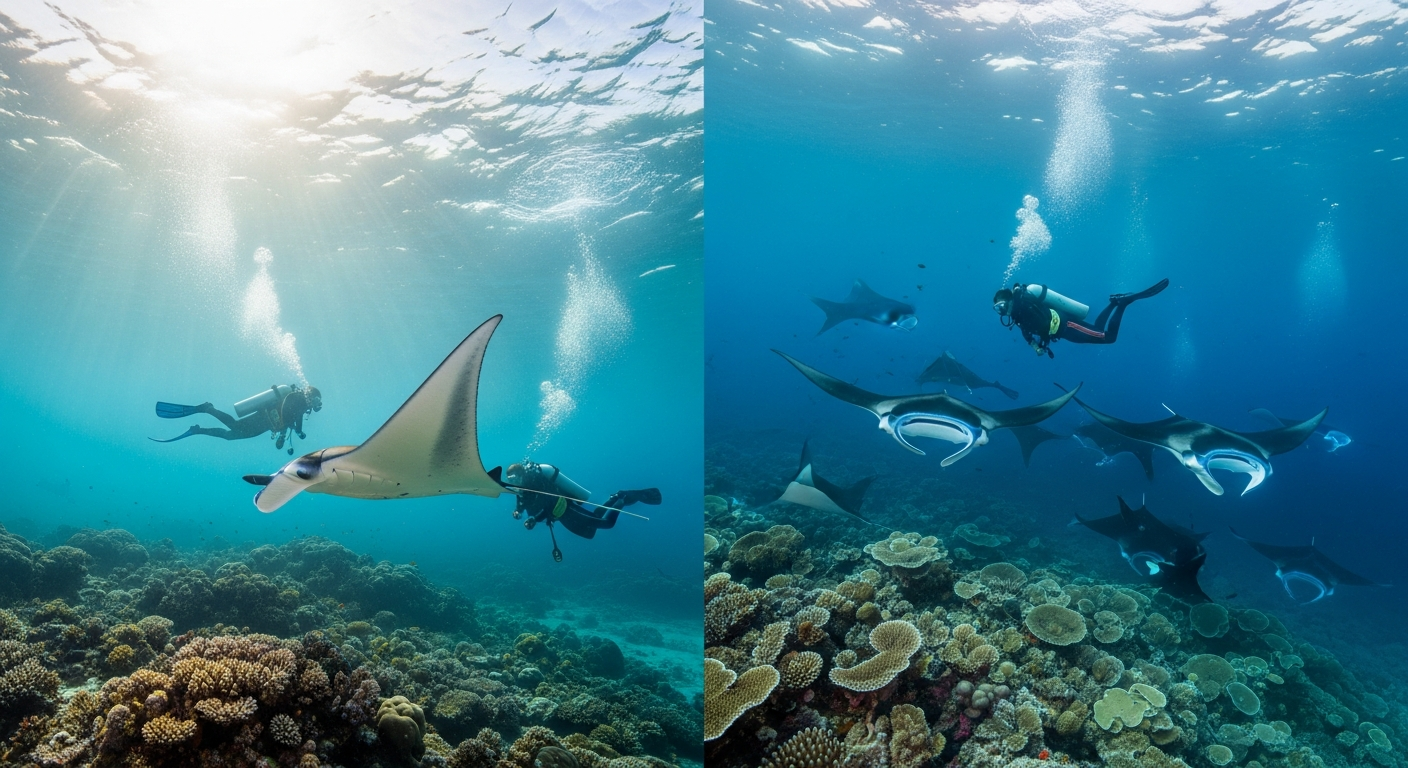
Manta rays are one of the major attractions for divers visiting Komodo and Raja Ampat. In Komodo, manta ray sightings are frequent at locations such as Manta Point and Mawan Island. These grand creatures are often seen gliding through the water gracefully, especially during the plankton bloom periods around December to February, when they gather to feed. During this time, divers can expect to see groups of manta rays swimming in synchronization, making for an memorable sight.
Raja Ampat offers exceptional manta encounters as well. The Dampier Strait, in particular, is a hotspot for manta rays, with the cleaning stations at Manta Sandy and Blue Magic being prime locations for sightings. Raja Ampat’s mantas are found year-round, but divers have reported peak sightings between November and April. The combination of nutrient-rich waters and coral reefs makes Raja Ampat a favored habitat for these gentle giants. Large congregations of mantas are often seen feeding around the island of Arborek during these months.
Comparing Marine Biodiversity
Both Komodo and Raja Ampat boast extraordinary marine biodiversity, but they offer different experiences. Komodo is celebrated for its variety of macro life, lively coral reefs, and pelagic species, including sharks and turtles. The currents in Komodo, while challenging, bring nutrient-rich waters that support a robust marine ecosystem. Dive sites like Cannibal Rock are renowned for their lively soft corals and dense fish life.
Raja Ampat, on the other hand, is acknowledged as one of the most biodiverse marine areas on Earth. It is estimated that over 1,500 species of fish and 600 species of coral can be found in its waters. The abundance of life here is due to its location within the Coral Triangle, making it an ultimate destination for divers interested in observing a wide variety of marine species in a single dive. Sites like The Passage and Cape Kri are famous for their dense schools of fish, including barracudas, trevallies, and snappers.
Accessibility and Travel Logistics
Accessing these remote diving locations requires careful planning. Komodo can be reached via Labuan Bajo on Flores Island, which has a domestic airport connected to major Indonesian cities such as Bali and Jakarta. From Labuan Bajo, divers typically take a liveaboard or a day trip boat to reach the dive sites within Komodo National Park. The journey to sites like Rinca Island, where Komodo dragons can also be seen, adds an extra element of adventure to the trip.
Raja Ampat is accessed through Sorong, a city in West Papua. Flights to Sorong are available from Jakarta and Makassar. Once in Sorong, travelers take a ferry or a speedboat to Waisai, the access point to Raja Ampat. While the journey can be lengthy and complex, the experience of diving in these rich waters is well worth the effort. Visitors can also explore the local Papuan culture and visit the beautiful karst islands around Kabui Bay.
Cost Considerations for Diving Trips
The cost of diving in Komodo and Raja Ampat varies, with Komodo generally being more budget-friendly. A typical liveaboard trip in Komodo ranges from $1,000 to $2,500, depending on the duration and luxury level. Day trips are also available for those staying in local accommodations, costing around $100 to $150 per dive. Accommodations in Labuan Bajo range from budget hostels to luxury hotels, catering to different budgets.
Raja Ampat, known for its remote location, tends to be more expensive. Liveaboard trips can range from $1,500 to over $4,000. The higher cost is often justified by the unparalleled biodiversity and the experience of diving in one of the world’s top dive destinations. Day trips from local resorts can cost between $150 and $200 per dive, reflecting the exceptional diving conditions. Accommodation options in Raja Ampat include eco-friendly resorts and homestays run by the local community.
Choosing the Best Time to Dive
The choice of when to dive in Komodo or Raja Ampat can substantially affect your experience. Komodo’s dry season from April to December provides calmer waters and excellent visibility, ideal for divers looking to see vast underwater landscapes clearly. This period coincides with the blooming season of the island’s famous pink beaches, adding a unique attraction for tourists.
Raja Ampat’s diving season is best from October to April, with November to February being particularly favorable for manta ray encounters. The region’s climate during these months is characterized by calmer seas and less rainfall, though divers should be prepared for occasional showers. This time is also ideal for visiting the Pianemo viewpoint for remarkable views of the surrounding islands.
Exploring with Spice Island Divers in Ambon
Spice Island Divers, located in Ambon, Indonesia, offers an exceptional diving experience, particularly known for its notable muck diving. Ambon is a notable in the diving world, providing unique opportunities to see rare and unusual marine creatures. The diving conditions in Ambon are generally calm, with visibility ranging from 15 to 30 meters, making it an excellent destination for underwater photographers.
A 5-night trip package with Spice Island Divers starts at $1,553 per person based on double occupancy. This package includes 10 day-dives, one blackwater-dive experience, a 1-hour massage, and stays in a seafront villa. These villas provide striking views and a relaxing post-dive environment, with prices for a 5-night trip in November 2027 set at $1,706 per person.
For those with a shorter duration, a 3-night package offering 7 day-dives is priced at $977.68 per person (originally $1,111). Both the 5-night and 3-night packages include tours to local attractions such as Amsterdam Fort, Lubang Buaya Beach, Liang Beach, and Natsepa Beach. The 5-night packages are available from December 1, 2026, to March 1, 2027, while the 3-night package travel dates extend from January 1, 2026, to December 31, 2026, with bookings required by the end of December 2026.
FAQs
Q? Which destination offers better visibility, Komodo or Raja Ampat? A: Komodo typically provides better visibility, often exceeding 30 meters, particularly in the dry season from April to December. Raja Ampat, while slightly lower in visibility (10-25 meters), compensates with incredible biodiversity.
Q? When is the best time to see manta rays in Komodo and Raja Ampat? A: In Komodo, manta rays are most commonly seen from December to February during the plankton bloom. Raja Ampat offers year-round manta sightings, with November to April being the peak months for encountering these gentle giants.
Q? How do the costs of diving in Komodo compare to Raja Ampat? A: Diving in Komodo is generally more affordable, with liveaboard trips ranging from $1,000 to $2,500. Raja Ampat is more costly due to its remote location, with liveaboard trips often exceeding $1,500. However, both destinations offer unique diving experiences worth their respective costs.
For wider arrangements, our partner komodoboatcharter can coordinate end to end.
Planning something bigger across Indonesia? For end-to-end service see baliairporttransfer.
Explore all spiceislandsdiving.com options and plan your trip.
Leave a Reply